
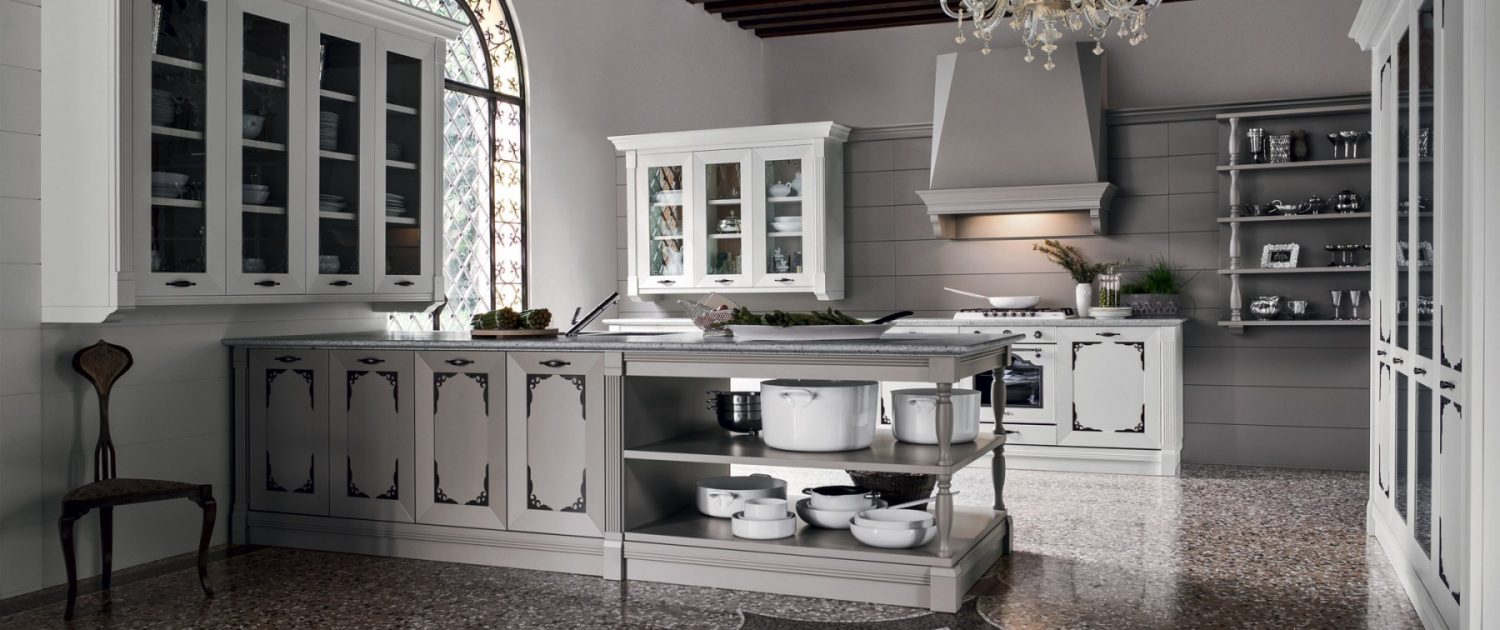
Worktops are the surface you touch every day, the largest uninterrupted material in the room, and usually the second-biggest line in a kitchen quote. They are also where UAE conditions matter more than the brochures suggest — hard water, strong sunlight through large windows, and kitchens that open onto terraces.
Here is how the four common choices actually behave here.
Engineered quartz
Best for: most kitchens, most households.
Non-porous, so it does not need sealing and does not stain from wine, oil or turmeric. Consistent pattern, which makes matching across a long run and an island straightforward. Hard enough to ignore normal use.
The catch in the UAE: quartz contains resin, and resin is affected by prolonged direct sunlight and by real heat. A quartz worktop on a sun-drenched terrace or in a window that takes afternoon sun can discolour over years. Never put a hot pan straight onto it — thermal shock is the most common way quartz gets damaged in Dubai kitchens.
Porcelain
Best for: sunlight, terraces, outdoor kitchens, and anyone who wants the marble look without the maintenance.
The most technically capable surface for this climate. UV-stable, so it does not fade in direct sun. Genuinely heat-resistant. Non-porous and highly scratch-resistant. Available in large-format slabs with realistic veining, and thin enough for very slim worktop profiles.
The catch: it is harder to work, so fabrication and mitred edges demand a skilled fabricator, and that is reflected in the price. Chipping at an exposed edge is the failure mode to design around rather than a reason to avoid it.
Natural stone — granite and marble
Best for: people who want the real material and will accept that it lives and ages.
Granite is dense and forgiving, and remains a sensible choice. Marble is beautiful and porous: it etches from lemon juice and vinegar, marks from oil, and will patinate. Some clients love that and specify it knowingly. Others are unhappy within a month. The honest question is not whether marble is good but whether you will be relaxed about it changing.
UAE-specific point: hard water leaves mineral marks around taps on polished stone more visibly than on quartz or porcelain. A honed finish hides it better than a polish.
Solid surface (acrylic composite)
Best for: seamless runs, integrated sinks, and curved or wrapped detailing.
Joins can be made effectively invisible, and an integrated sink with no rim is genuinely easier to clean. Repairable — scratches can be sanded out, which no other option here offers.
The catch: softer than the others, and not heat-resistant. It suits a utility area, a bathroom or a design that needs a shape stone cannot make, more than a hard-working main kitchen.
Choosing quickly
- Kitchen takes strong afternoon sun, or opens to a terrace? Porcelain.
- Busy family kitchen, want to stop thinking about it? Engineered quartz.
- Want the real thing and will accept patina? Natural stone, honed rather than polished.
- Need seamless runs or an integrated sink? Solid surface.
- Outdoor kitchen? Porcelain, and nothing else without reservations.
Details that matter more than the material
Thickness and edge. A 20mm slab with a mitred edge can be made to read as 40mm or more. This is a design decision with a real cost attached, so decide it early.
Where the joins fall. On a long run there will be a join. Its position is a choice — put it where it is least visible, not where it is most convenient to fabricate.
Cut-outs. Undermounted sinks and flush hobs need accurate templating from the installed cabinetry, not from a drawing.
Upstands and splashbacks. Matching the worktop material up the wall looks calm and avoids a grout line behind the hob. It also adds cost — worth knowing before it appears as a variation.
Look at full slabs, not samples
A 100mm sample tells you the colour and almost nothing about the veining, which is what you will actually live with. Before anything is cut, ask to see the actual slab at the stone yard in daylight — reputable suppliers expect it, and it is the best way to avoid a surprise. We arrange that as part of specifying a kitchen worktop. Request a quote and we will specify the surface against how you actually use the room.